


As a Fractional CFO who’s helped countless non-profits thrive, I’ve seen firsthand how a rock-solid financial structure isn’t just a “nice-to-have” – it’s the 𝗹𝗶𝗳𝗲𝗹𝗶𝗻𝗲 that keeps your mission alive. In a world of unpredictable funding, rising costs, and seasonal surges like Ramadan (when donations skyrocket but so do demands), poor financial management can derail even the noblest causes. But here’s the good news: With the right strategies, you can turn financial chaos into sustainable impact!
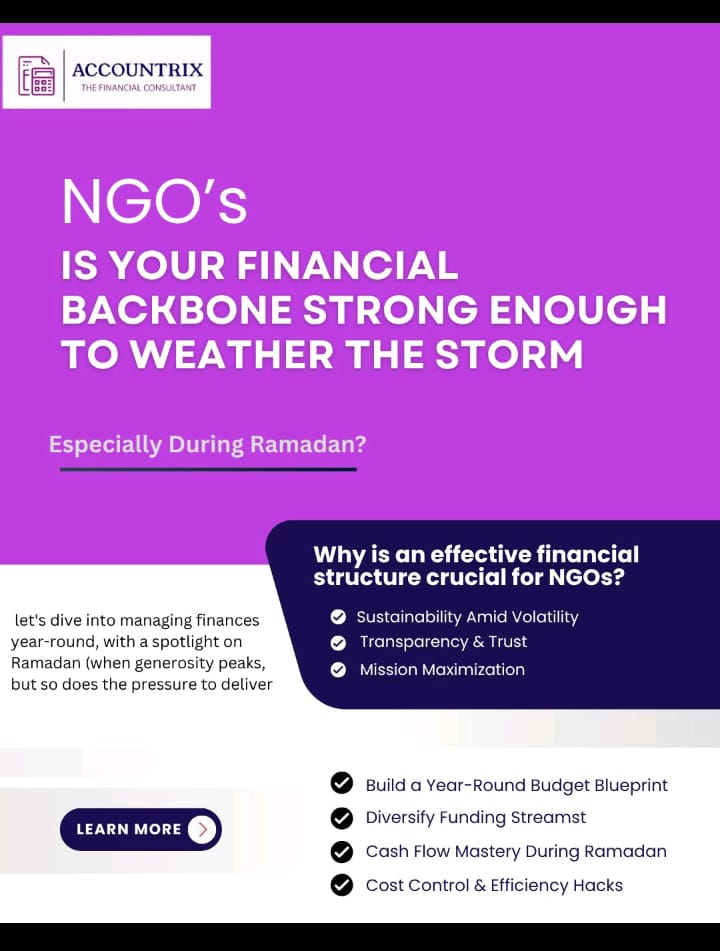
𝗪𝗵𝘆 𝗶𝘀 𝗮𝗻 𝗲𝗳𝗳𝗲𝗰𝘁𝗶𝘃𝗲 𝗳𝗶𝗻𝗮𝗻𝗰𝗶𝗮𝗹 𝘀𝘁𝗿𝘂𝗰𝘁𝘂𝗿𝗲 𝗰𝗿𝘂𝗰𝗶𝗮𝗹 𝗳𝗼𝗿 𝗡𝗚𝗢𝘀?
𝗦𝘂𝘀𝘁𝗮𝗶𝗻𝗮𝗯𝗶𝗹𝗶𝘁𝘆 𝗔𝗺𝗶𝗱 𝗩𝗼𝗹𝗮𝘁𝗶𝗹𝗶𝘁𝘆: It ensures steady cash flow, preventing burnout from feast-or-famine cycles – vital when 70% of NGO funding often comes from short-term grants.
𝟮.𝗧𝗿𝗮𝗻𝘀𝗽𝗮𝗿𝗲𝗻𝗰𝘆 & 𝗧𝗿𝘂𝘀𝘁: Donors demand accountability; robust systems build credibility, unlocking more support.
𝟯.𝗠𝗶𝘀𝘀𝗶𝗼𝗻 𝗠𝗮𝘅𝗶𝗺𝗶𝘇𝗮𝘁𝗶𝗼𝗻: Free up resources from admin headaches to focus on what matters – changing lives!
Now, let’s dive into managing finances year-round, with a spotlight on Ramadan (when generosity peaks, but so does the pressure to deliver):
1.Build a Year-Round Budget Blueprint:
Start with a 12-month rolling forecast that anticipates seasonal dips and spikes. Factor in fixed costs (salaries, rent) vs. variable ones (program expenses). Pro Tip: Use tools like QuickBooks or Xero for real-time tracking to avoid surprises.
2.Diversify Funding Streams:
Don’t rely solely on Ramadan donations (which can make up 40-50% of annual intake for many faith-based NGOs). Cultivate corporate partnerships, grants, and crowdfunding throughout the year to create a balanced portfolio.
3.Cash Flow Mastery During and After Ramadan:
Donations pour in, but outflows for iftars, aid distributions, and campaigns explode. Set up a dedicated “Ramadan Reserve Fund” 3-6 months prior, allocating 20-30% of expected inflows to buffer post-Ramadan lulls.
4.Cost Control & Efficiency Hacks:
Audit expenses quarterly – negotiate vendor deals, go digital for operations, and train staff on financial literacy. During Ramadan, prioritize high-impact spends like community outreach over lavish events.
5.Compliance & Reporting Rhythm:
Stay audit-ready with monthly reconciliations and transparent dashboards. This not only satisfies regulators but also wows donors with impact reports – turning one-time givers into lifelong supporters.
NGO leaders: If your finances feel like a rush every day, it’s time to level up! As a Fractional CFO, I specialize in crafting tailored strategies that amplify your impact without the full-time cost. DM me to chat about fortifying your NGO’s financial future. What’s one financial challenge your organization faces? Share below!